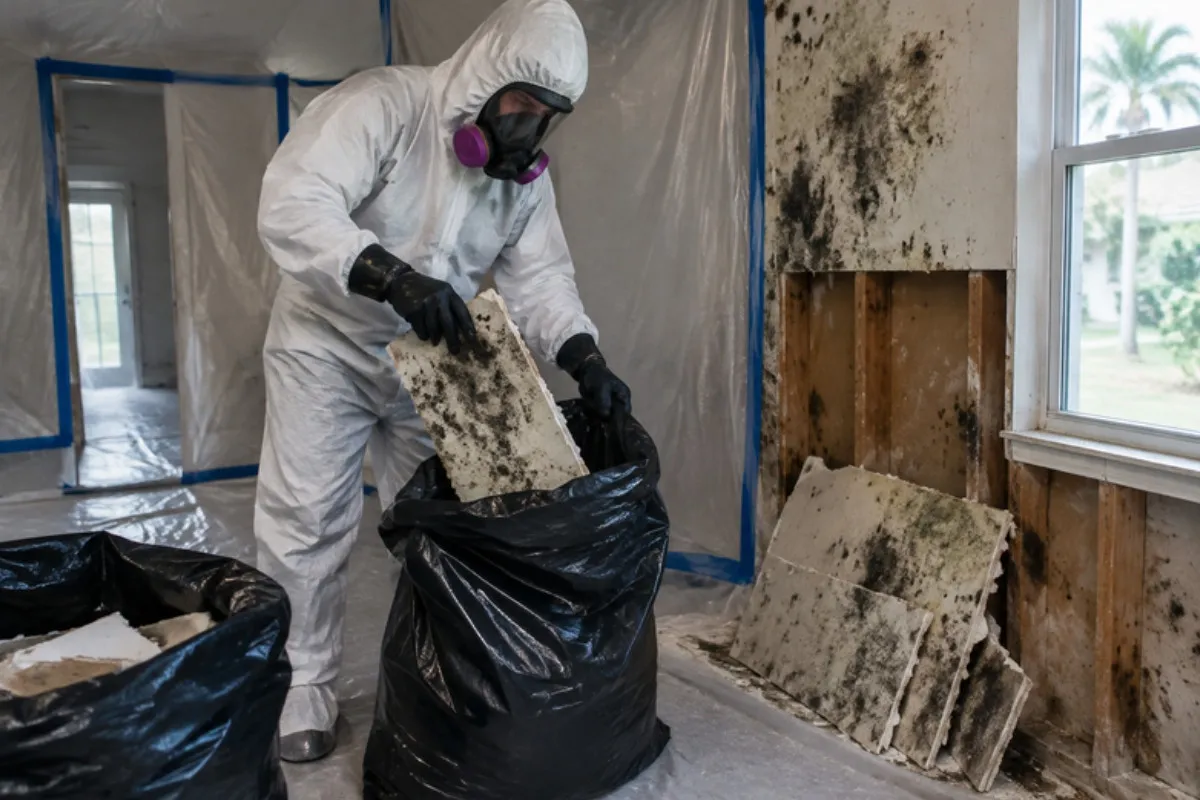
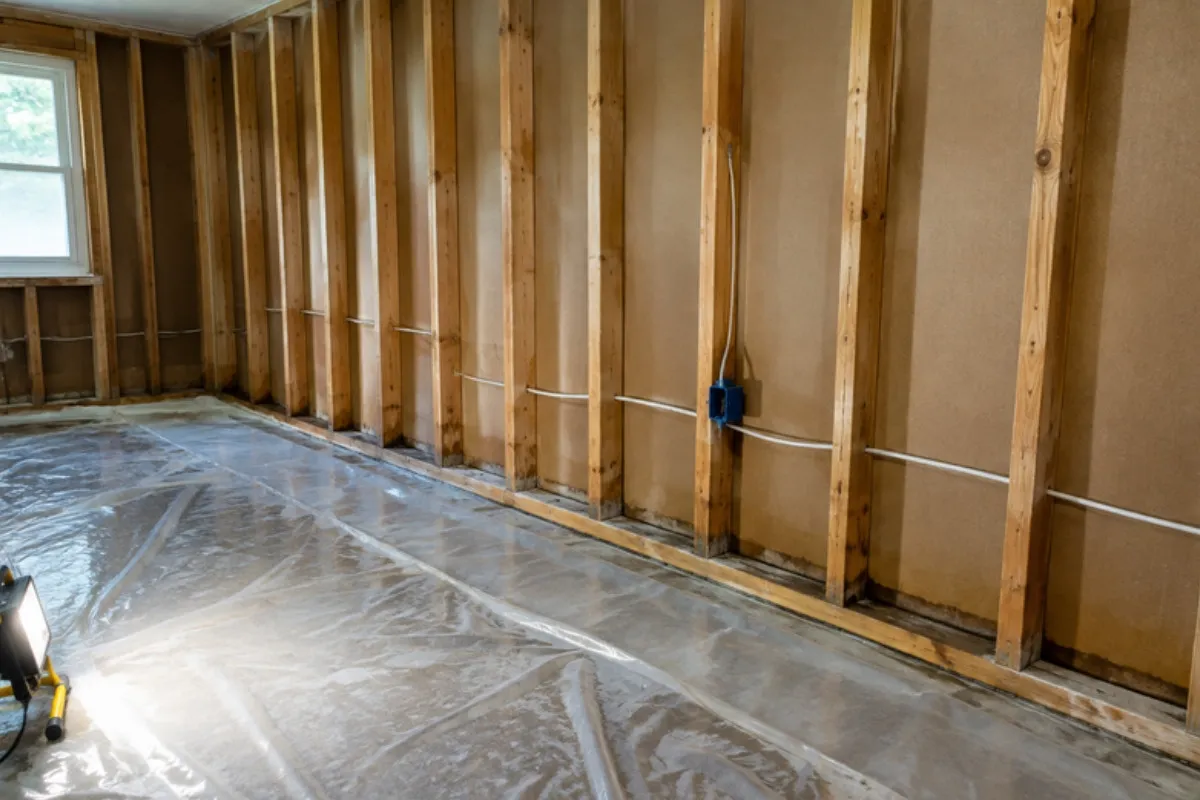
Black mold in a South Houston home is removed the way EPA describes for any indoor mold: fix the water source, then remove the growth along with damaged drywall, insulation or carpet. Small patches on hard surfaces are usually a homeowner job, while larger or hidden growth needs a Texas mold assessor and a separate remediation company. Call the number on this page to be connected with a local mold remediation company in South Houston.
About South Houston
South Houston is a small city of about 16,200 people, incorporated in 1913, that borders Houston and Pasadena roughly 16 miles from downtown. Manufacturing moved in after the Houston Ship Channel was built, and a 1915 hurricane destroyed many of those early industries. Today the moisture threats are the ones found across the area: heavy Gulf rain on flat clay ground that drains slowly, humid summers, and air conditioning that runs for most of the year. Dark growth tends to start at roof leaks, plumbing drips, sweating ducts and low spots where water collects against a slab.
What to do now
- Find the source. Look up toward the roof and attic unit, behind appliances and under sinks. Removal without a fix only buys time.
- Do not stir it up. Skip scraping, sanding and dry brushing, which spread spores.
- Turn off the AC if the growth is on vents or the air handler. EPA warns that a contaminated system can spread mold through the house.
- Dry quickly. EPA says wet materials should be dried within 24 to 48 hours to prevent growth.
- Size it up. Under about 10 square feet on a hard surface, a homeowner can usually clean it. Bigger or hidden growth needs professionals.
- Ask the city before rebuilding. Check with the City of South Houston about permits for drywall, ceiling or flooring replacement after removal.
Signs and likely causes
| What you see | Likely cause |
|---|---|
| Dark patch on a ceiling that grows after rain | Roof or flashing leak |
| Black specks around supply vents | Condensation from cold AC air |
| Mold on the wall behind the washer or fridge | Leaking hose, valve or ice-maker line |
| Soft, darkened drywall near the floor | Water that came in during a heavy storm |
| Spotting inside bathroom cabinets | Slow drain leak or poor exhaust |
Cost factors
Angi's Houston cost data reports an average removal cost of $2,016, typically $863 to $3,329. The square footage of growth, how much material comes out, whether ducts or the attic are involved and how easy the area is to reach all matter. Texas law requires the mold assessment and the removal on the same project to be done by different companies, so the consultant who writes the protocol and checks clearance bills separately. Check both on TDLR's license search.
Black Mold Removal questions in South Houston
Should I have the black mold tested to learn the species?
Who should stay away from the moldy area until it is removed?
What paperwork should I get after the removal is finished?
Why does black mold keep coming back in the same spot?
More mold services in South Houston
Black Mold Removal nearby
Helpful guides
Sources
- EPA: Mold Cleanup in Your Home
- EPA: A Brief Guide to Mold, Moisture and Your Home
- EPA: Mold Information Slideshow (testing and sampling)
- TDLR: Mold Assessors and Remediators FAQs
- TDLR: License Search
- 16 Tex. Admin. Code 78.150: Photographs; Certificate of Mold Damage Remediation; Duty of Property Owner
- Angi: How much do mold removal services typically cost? (Houston, TX)
- Wikipedia: South Houston, Texas
Last updated: