Attic mold in Sugar Land almost always follows moisture from the AC system, a roof leak or humid air trapped under the decking. Fixing it means stopping that source, then removing wet insulation and cleaning or replacing moldy wood under a protocol written by a separate assessor. Call the number on this page to be connected with a local mold remediation company in Sugar Land.
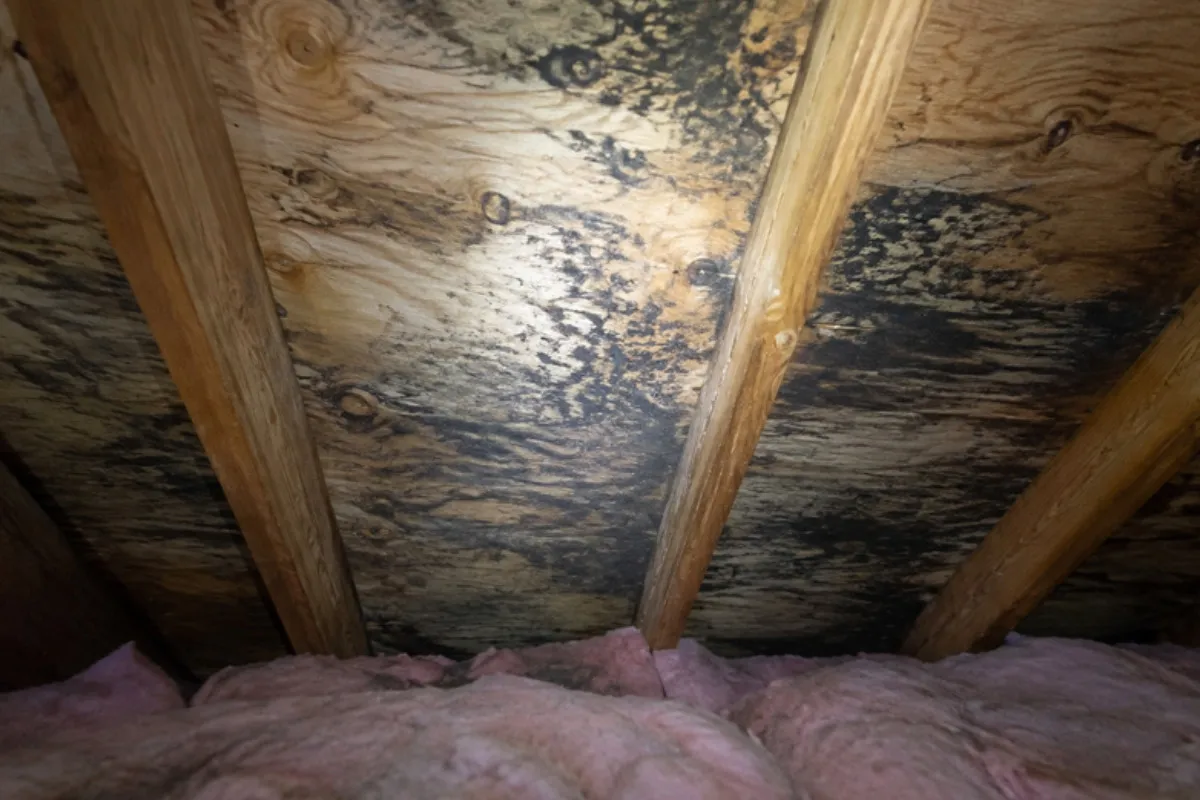
Signs your attic has a mold problem
- Gray, green or black spotting on the underside of the roof decking
- A musty smell when you open the hatch or near ceiling vents
- Insulation that looks matted, stained or damp
- Rust or standing water in the secondary drain pan
- Ceiling stains in rooms below the air handler
- Frost-like white growth on rafters near a bath fan
Local conditions in Sugar Land
Sugar Land is a large suburb about 17 miles from Houston, built around thirteen master-planned communities such as First Colony, Sugar Creek, Greatwood, New Territory and Telfair. Many homes are two stories with the AC equipment in the attic and supply ducts running a long way across it, which puts a lot of cold surface in hot, humid air. Even though no Sugar Land homes were reported flood-damaged in the Memorial Day 2016 Brazos flood, attic mold here is common for everyday reasons: condensate lines clog, flex duct jackets age and split, and fans get vented into the attic during remodels.
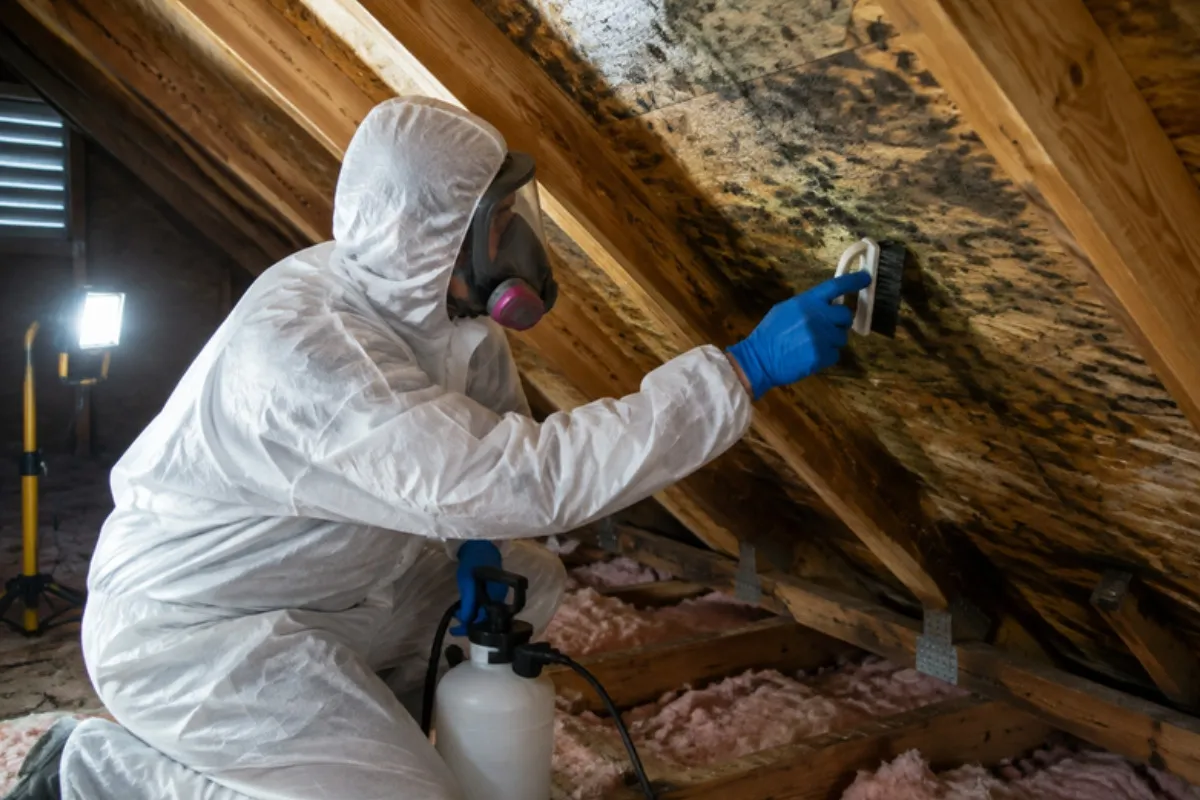
What affects cost
National ranges (HomeGuide, 2026) run $1,500 to $6,000 for a partial attic and $6,000 to $15,000 for a full one. Bigger two-story attics, heavy blown-in insulation, decking replacement and duct work all push the number up. Texas law means two bills: one for the mold assessment consultant who writes the protocol and checks clearance, and one for the remediation company. If decking, framing or ceiling drywall is replaced, Sugar Land Permits & Inspections handles permits at 2700 Town Center Blvd. North, 281-275-2900; remodel submittals need a floor-plan drawing plus any mechanical changes.
What happens when you call
You'll be connected with an independent local company. Expect questions about where the growth is, whether the AC unit is in the attic and any recent leaks. The assessment comes first; a written protocol follows, then removal by a separate company holding a TDLR mold remediation contractor license, then a clearance check and a Certificate of Mold Damage Remediation. Tenants in a registered rental can report an owner who fails to fix HVAC or plumbing problems to the city's Rental Licensing Program.
Attic Mold Removal questions in Sugar Land
Will more attic vents keep the mold from coming back?
Will homeowners insurance pay for attic mold removal?
Is black mold on attic wood worse than other mold?
Will the county health department inspect attic mold?
More mold services in Sugar Land
Attic Mold Removal nearby
Sources
- EPA: Mold Cleanup in Your Home
- EPA: A Brief Guide to Mold, Moisture and Your Home
- TDLR: Mold Assessors and Remediators FAQs
- 16 Tex. Admin. Code 78.150: Photographs; Certificate of Mold Damage Remediation; Duty of Property Owner
- HomeGuide: How Much Does Mold Removal and Remediation Cost? (2026)
- Fort Bend County Health & Human Services: Environmental Health service area
- Community Impact: Fort Bend County recuperates, cleans following Memorial Day weekend floods (2016)
- City of Sugar Land: Residential permits
- City of Sugar Land: Rental Licensing
- Wikipedia: Sugar Land, Texas
Last updated: