Baytown businesses and multifamily owners facing more than a small patch of mold need two separate firms under Texas law: a mold assessment consultant to write the protocol and a remediation company to do the removal. The 25-contiguous-square-foot line decides whether in-house staff can handle it. Call the number on this page to be connected with a local mold remediation company in Baytown.
What happens when you call
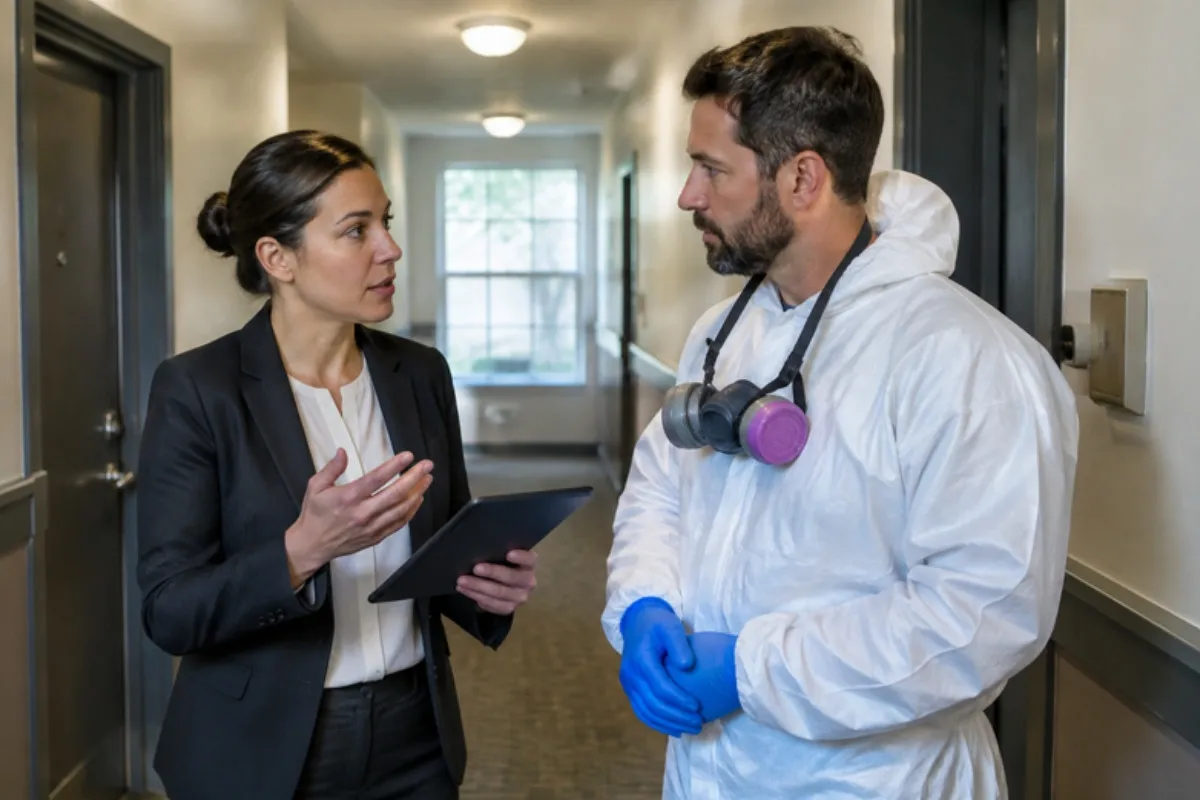
You reach a local mold remediation company that serves Baytown. Expect questions about the building type, how large the affected area looks, whether a roof, pipe or storm caused it and whether the space is occupied. For a commercial job the company will usually point you to an independent mold assessment consultant first, because Texas does not let one firm assess and remediate the same project. The consultant inspects, then delivers a written protocol at least one calendar day before work begins. The remediation company answers with its own work plan and, for 25 contiguous square feet or more, notifies TDLR at least five days ahead.
What moves the price
- Square footage affected, and whether growth runs above the ceiling or behind fixed equipment
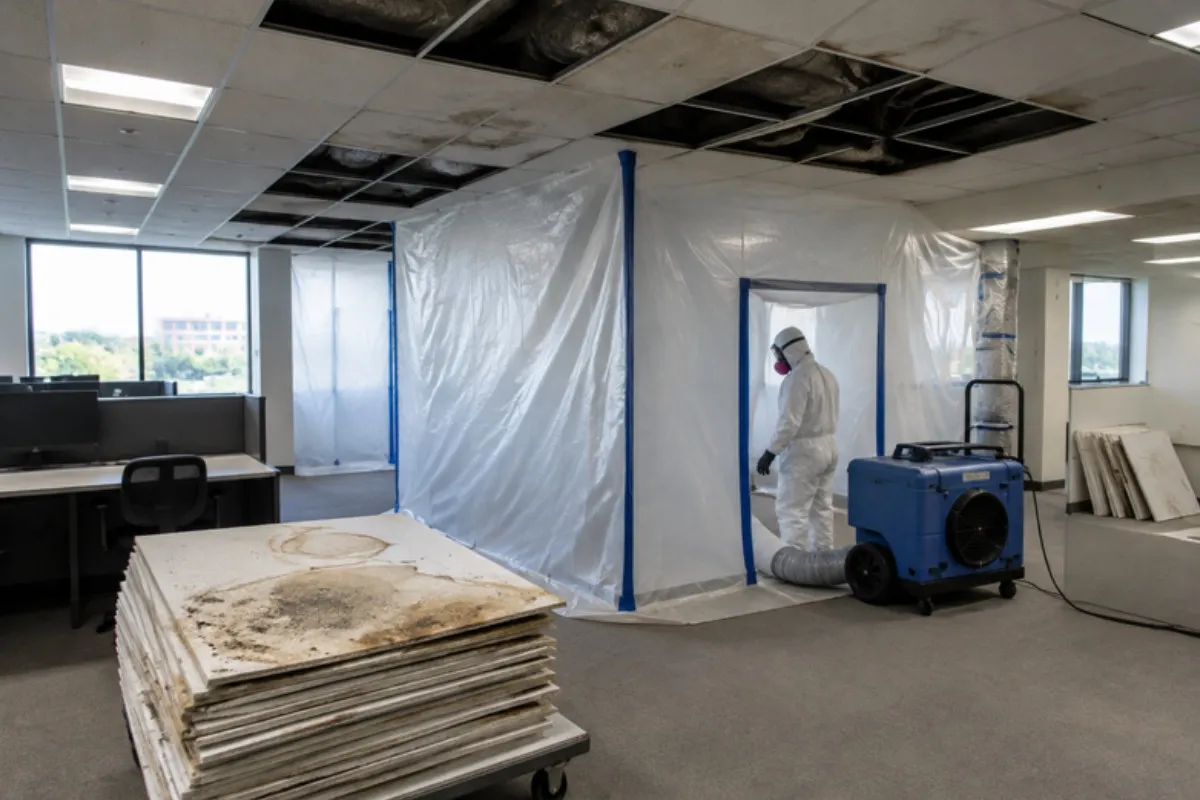
- Containment needs: plastic walls, negative air machines and sealed HVAC returns
- Night or weekend labor so a store or office can keep operating
- Disposal of porous materials such as ceiling tile, carpet and drywall
- The consultant's protocol and clearance visit, billed separately
National ranges from HomeGuide (2026) run $6,000 to $15,000 for 300 to 1,000 square feet, and larger commercial areas go higher. Get written quotes tied to the same protocol so they can be compared line by line.
Baytown conditions behind commercial mold
Baytown sits about 29 miles from Houston, mostly in Harris County with a portion in Chambers County, and is bordered by water on three sides: Galveston Bay to the south and west and Cedar Bayou to the east, with Goose Creek and the Houston Ship Channel close by. Its economy leans on petrochemical processing, including the Baytown Refinery. Flat ground and the bay make flooding a recurring problem, and groundwater pumping caused severe subsidence in low areas such as Brownwood. Hurricanes Carla, Alicia, Ike and Harvey are named as the four most damaging storms to hit the city. Older commercial strips along Market Street, Decker Drive and Garth Road share the usual Gulf Coast problems: roof leaks, sweating ductwork and humid air pulled into cool interiors.
Repairs that follow remediation go through the City of Baytown Building Services Division Permit Center, and substantial improvements in flood hazard areas also get floodplain review from Public Works and Engineering. The city's Code Enforcement Division licenses multifamily properties and manufactured home parks.
Before the crew arrives
- Stop the water source or get it scheduled for repair
- Pull maintenance logs for roof work, plumbing and AC service
- Tell tenants or staff which areas will close
- Have the protocol and work plan on hand for whoever runs the building
Commercial Mold Remediation questions in Baytown
Does the 25-square-foot rule apply to our apartment community?
Does TDLR have to be notified before the work starts?
Do we need a building permit to rebuild afterward?
Does past mold work have to be disclosed when the property sells?
More mold services in Baytown
Commercial Mold Remediation nearby
Sources
- TDLR: Mold Assessors and Remediators FAQs
- TDLR: Texas Mold Assessors and Remediators Law
- TDLR: Texas Mold Remediation Notification Requirements
- 16 Tex. Admin. Code 78.150: Photographs; Certificate of Mold Damage Remediation; Duty of Property Owner
- HomeGuide: How Much Does Mold Removal and Remediation Cost? (2026)
- City of Baytown: Building Services
- City of Baytown: Permit Floodplain Information (pdf)
- Wikipedia: Baytown, Texas
Last updated: