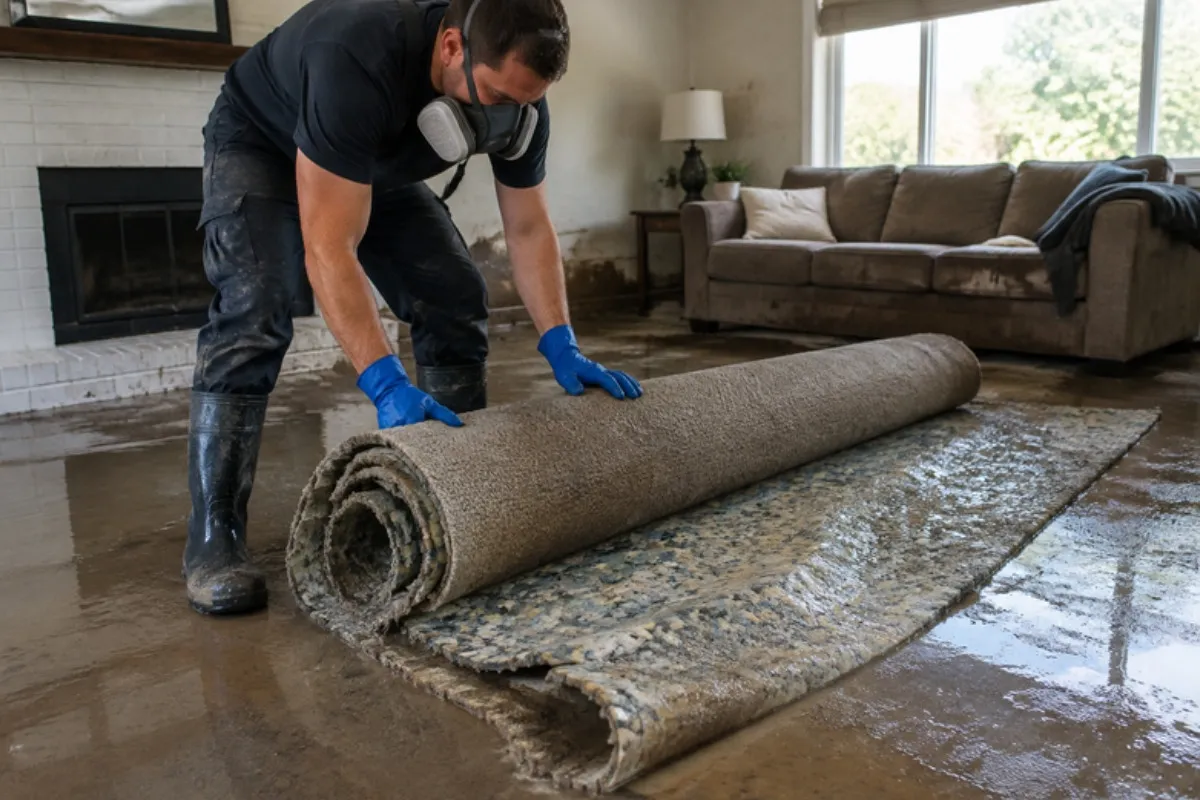
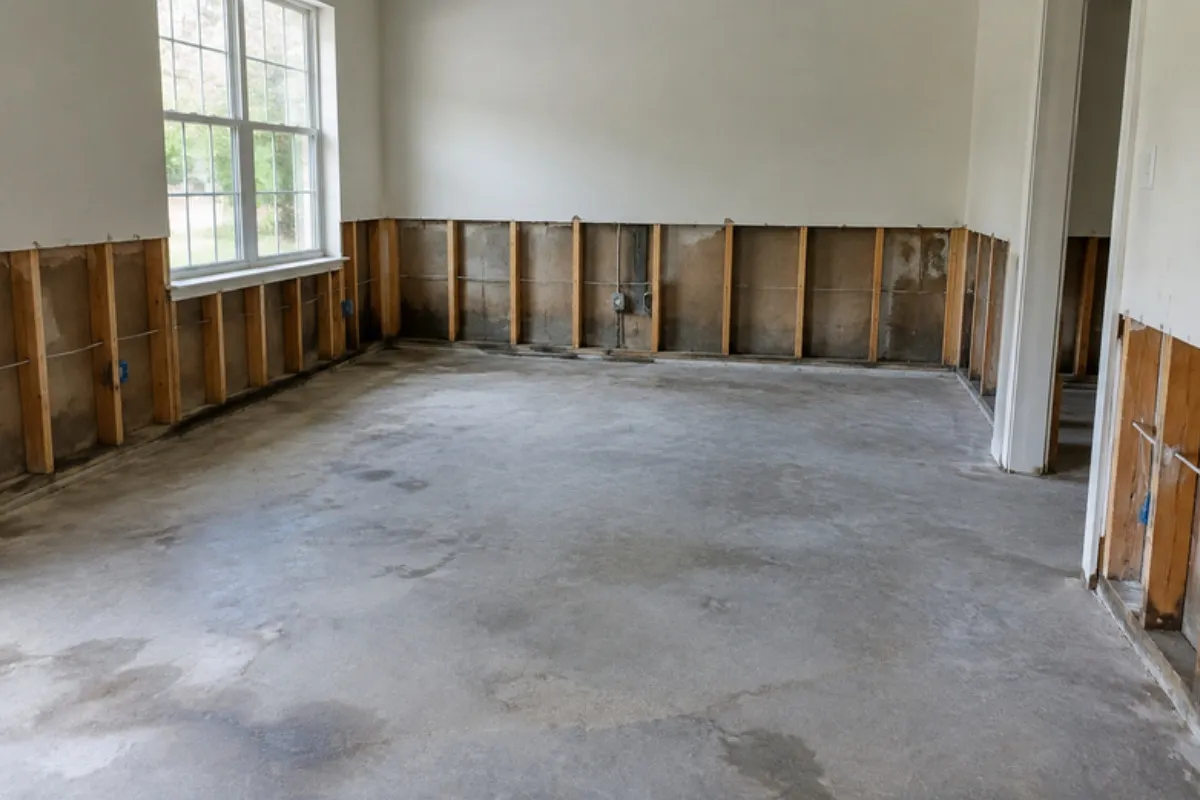
Post-flood mold removal in Dayton starts after the water is stopped and drying is underway: a mold assessment consultant scopes the damage in a written protocol, a separate company removes soaked materials and cleans the structure, and the consultant confirms clearance. Texas law keeps those two roles in different companies. Call the number on this page to be connected with a local mold remediation company in Dayton.
Signs mold is growing after water damage
- A musty odor that lingers once the house has been closed up
- Dark or fuzzy spots low on walls and on baseboards
- Paint bubbling or wallpaper peeling
- Floors that feel soft, or flooring that lifts
- Growth around ceiling registers after the AC starts
- Stains spreading from ceiling corners after a storm
Dayton and the Trinity
Dayton is a Liberty County city of about 8,800 on US 90, roughly 38 miles from Houston. It was founded as West Liberty, about three miles west of the Trinity River, and grew into a Union Pacific and BNSF rail junction with a BNSF yard just south of town; about 78 percent of residents are counted as urban. During Harvey, releases from Lake Livingston into the Trinity matched the 1994 record, and more than 7,000 homes across Liberty County were affected, about 800 with major damage or destroyed. Away from the river, Dayton shares the region's usual moisture sources: tropical downpours on flat, slow-draining ground, storm-damaged roofs and AC systems that run most of the year.
What affects cost
Angi's Houston cost data shows an average of $2,016 for mold removal, typically $863 to $3,329. Flooded homes often need more; national ranges (HomeGuide, 2026) put 300 to 1,000 square feet at $6,000 to $15,000. Your quote depends on the wet area, materials removed, ducts, access, and the separate assessment consultant Texas requires. Ask each company for a written scope so you can compare quotes against the consultant's protocol line by line, and check both on TDLR's license search.
What happens when you call
You'll describe the source and extent of the water and be connected with independent local companies. A mold assessment consultant writes the protocol; a separate remediation company carries it out under containment; for 25 contiguous square feet or more, it notifies TDLR five days before starting; and after clearance you receive a Certificate of Mold Damage Remediation. For the rebuild, the City of Dayton Building Division under Planning & Development Services issues residential permits; plan review for new construction can take up to 10 days, and inspections are generally required for each permit.
Post-Flood Mold Removal questions in Dayton
Does the house have to be dry before the mold work starts?
Is it safe to run the AC in a house that flooded?
Why do I need two different companies for a flood mold job?
Do I need a permit to rebuild after flood mold removal in Dayton?
More mold services in Dayton
Post-Flood Mold Removal nearby
Helpful guides
Sources
- EPA: Homeowner's and Renter's Guide to Mold Cleanup After Disasters (pdf)
- EPA: Mold Cleanup in Your Home
- TDLR: Mold Assessors and Remediators FAQs
- TDLR: Texas Mold Remediation Notification Requirements
- 16 Tex. Admin. Code 78.150: Photographs; Certificate of Mold Damage Remediation; Duty of Property Owner
- Angi: How much do mold removal services typically cost? (Houston, TX)
- HomeGuide: How Much Does Mold Removal and Remediation Cost? (2026)
- Wikipedia: Dayton, Texas
- Washington Times: Harvey recovery continues in parts of flooded Liberty County
- City of Dayton: Building Permits & Inspections
Last updated: