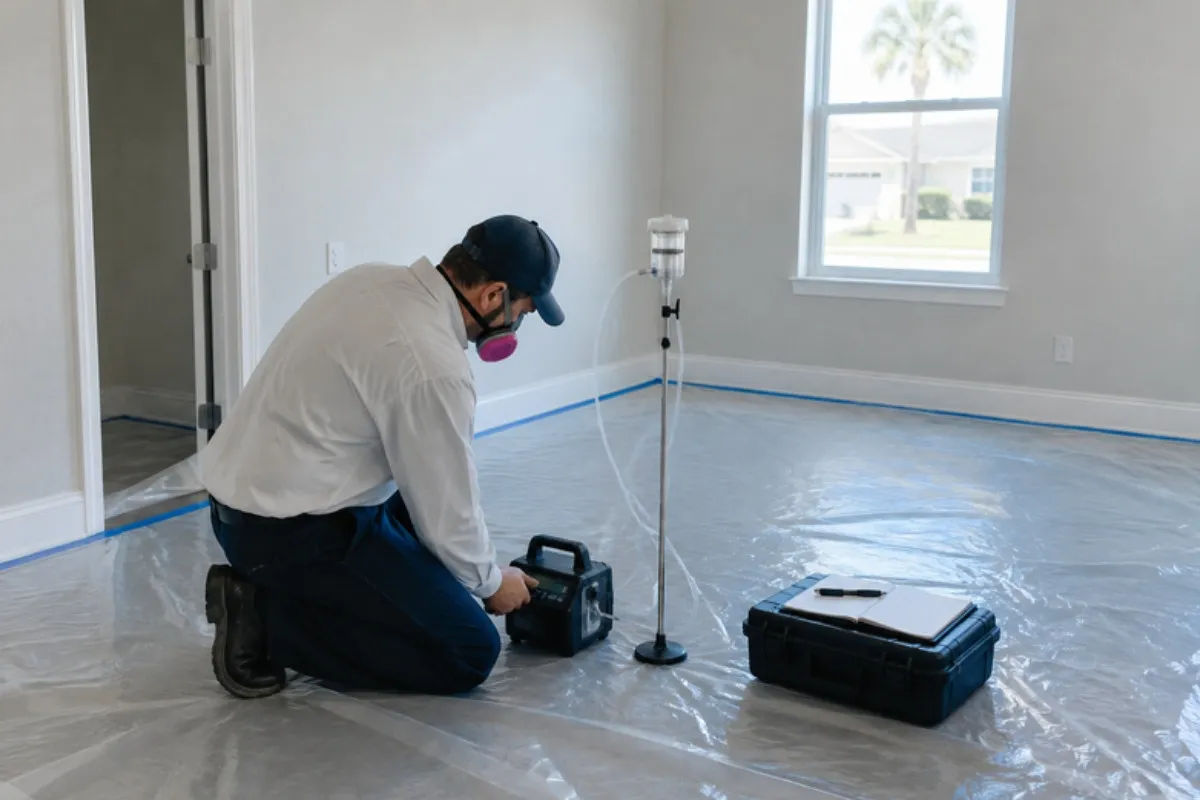
Clearance testing for a Highlands home is the post-remediation assessment by the mold assessment consultant who wrote the protocol, who confirms the work area is free of visible mold and wood rot and meets the criteria set beforehand. It is the step that closes a Texas mold project. Call the number on this page to be connected with a local mold inspector in Highlands.
Highlands and the river
Highlands is an unincorporated community of about 8,600 people in industrial east Harris County, around 24 miles from downtown Houston. It sits on the higher east bank of the San Jacinto River, near the Houston Ship Channel, and grew during World War II housing military members and war-plant workers. Higher ground has not kept every home dry. In an October 2015 storm, an EF-0 tornado closed FM 2100 and the San Jacinto rose about six feet above normal, flooding some homes near the river. River water that soaks into drywall and insulation for even a day or two can lead to growth inside walls, which is why a careful post-remediation check matters here.
The two assessments on a Texas mold job
| Before removal: the protocol | After removal: clearance | |
|---|---|---|
| Done by | Mold assessment consultant | The same consultant |
| Purpose | Define the areas, materials, containment, methods and pass criteria | Confirm the work met those criteria |
| Timing | At least one calendar day before work begins | After the remediation contractor finishes |
| Result | A written plan the contractor must follow | A passed clearance report, or more remediation |
The removal itself is done by a separate company that holds a TDLR mold remediation contractor license. Texas law bars one company from both roles on the same project.
Signs to watch for before the return visit
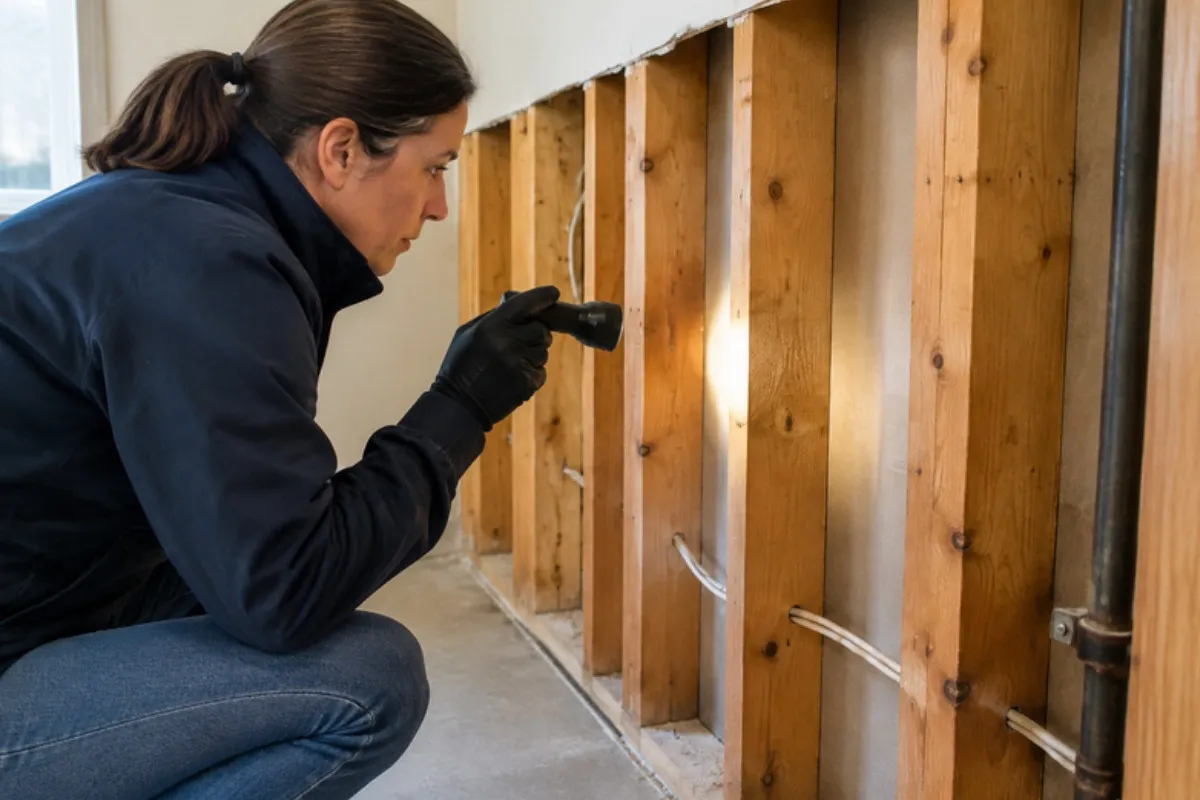
- Framing near the floor line that still darkens a moisture meter's reading.
- Gaps or tears in containment plastic that could have let debris drift into other rooms.
- Soft or crumbling wood at sill plates, which a consultant will flag as rot.
- A smell that lingers in closets or behind furniture outside the work zone.
Timing and seasonal notes
Most heavy rain in this part of Harris County comes with spring storms and the tropical season, and that is when river-adjacent homes are most likely to need remediation and clearance. Don't rush the dry-out to hit a repair date; a wet stud will not pass. Once the area clears, rebuilding permits for unincorporated Highlands come from the Harris County Office of the County Engineer's residential group, and work in the 100-year floodplain needs drawings sealed by a Texas architect or engineer. Renters can report dilapidated or unsafe conditions and standing water to Harris County Public Health's Neighborhood Nuisance program through Harris County 311.
Post-Remediation Clearance Testing questions in Highlands
If the job passes, can mold still come back?
What happens if the work area fails clearance?
How do I check the consultant doing my clearance?
Do I have to share clearance paperwork when I sell?
More mold services in Highlands
Post-Remediation Clearance Testing nearby
Sources
- Wikipedia: Highlands, Texas
- Star-Courier: Tornado hits Highlands, flooding in Crosby
- Harris County Office of the County Engineer: Permits FAQ
- Harris County Public Health: Neighborhood Nuisance
- TDLR: Mold Assessors and Remediators FAQs
- EPA: A Brief Guide to Mold, Moisture and Your Home
- TDLR: Consumer Mold Information Sheet (pdf)
- TDLR: License Search
- 16 Tex. Admin. Code 78.150: Certificate of Mold Damage Remediation
Last updated: